Most S3-compatible storage providers advertise a free tier. Few of them tell you upfront that "free" usually applies to storage only. Egress fees, API request charges, and operation limits are where the real costs hide.
This guide breaks down the actual usable free tier of every major S3-compatible storage provider worth considering in 2026, covering storage, egress, and API limits so you know exactly what you're getting before you build around a provider.
Why S3 Compatibility Matters
The S3 API is the de facto standard for object storage. Every major tool, SDK, backup agent, and CLI utility speaks it. Picking an S3-compatible provider means your code works the same whether you're pointing at an AWS bucket in us-east-1 or a Cloudflare R2 bucket in their global network.
Vendor lock-in dies when the API is a commodity. You can switch providers by changing an endpoint URL and a pair of access keys. No rewrite. No migration library. No vendor-specific SDK.
That portability is exactly why Rilavek supports any S3-compatible data store out of the box. Your FTP, SFTP, or HTTP uploads land wherever you point them.
The Comparison Table
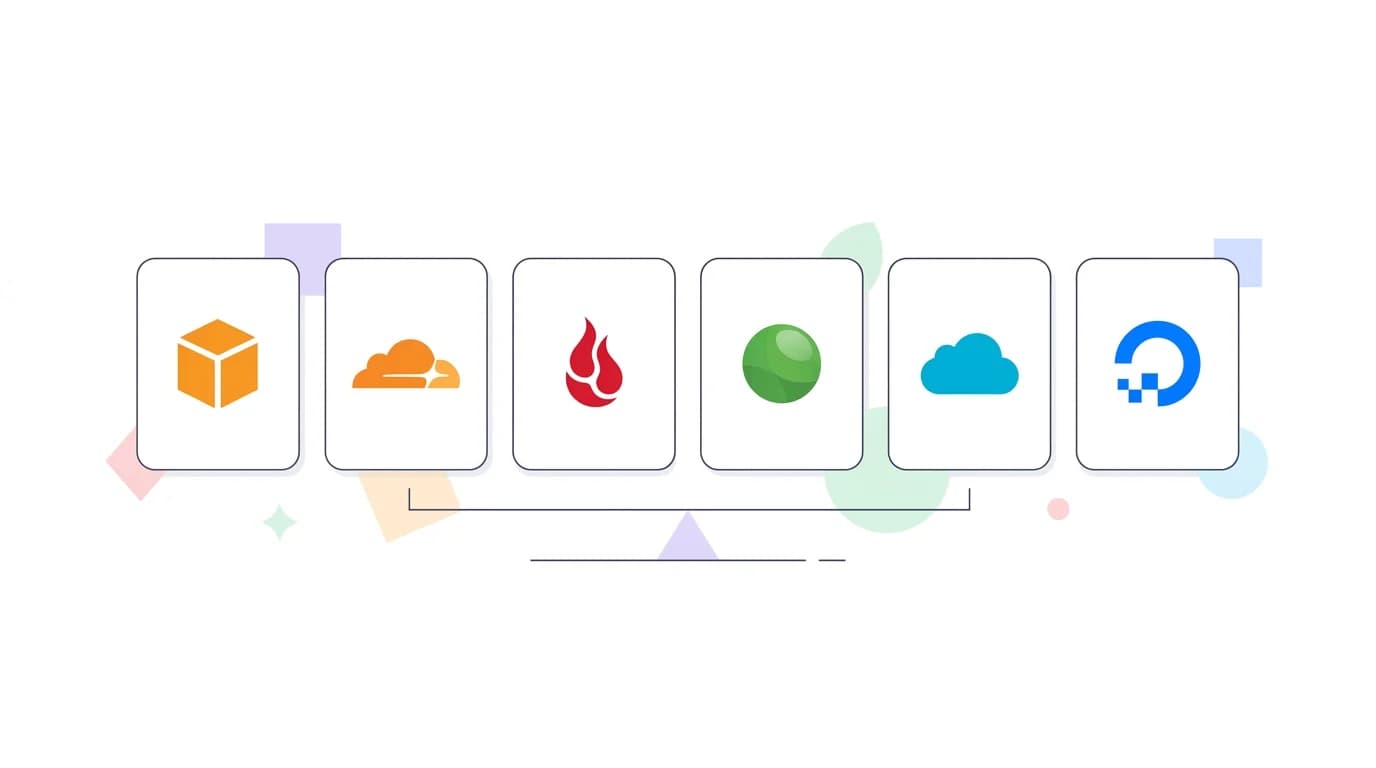
| Provider | Free Storage | Monthly Egress | Monthly API Operations | Ongoing or Trial? |
|---|---|---|---|---|
| Cloudflare R2 | 10 GB | Unlimited ($0) | 1M Class A / 10M Class B | Ongoing |
| Backblaze B2 | 10 GB | 3× stored data (30 GB) | 2,500/day Class B & C free | Ongoing |
| IDrive e2 | 10 GB | 1:1 ratio (10 GB) | Unlimited | Ongoing |
| Filebase | 5 GB | 5 GB | No per-request charges | Ongoing |
| Scaleway | 75 GB | 75 GB | Included | 3-month trial |
| AWS S3 | 5 GB | 100 GB (first 12 months) | 2K PUT / 20K GET | 12-month trial |
⚠️ Warning: "Free" ≠ "Free to Use"
Storage is cheap. Egress and API requests are where free tiers quietly expire. A backup script that lists bucket contents every 5 minutes will burn through Class B operations in weeks. A static site behind S3 without a CDN will hemorrhage egress. Always check what "free" actually covers before you commit.
Provider Breakdowns
Cloudflare R2: The Zero Egress Play
Free tier: 10 GB storage, 1M Class A ops, 10M Class B ops, $0 egress forever.
R2's pitch is blunt: egress costs are a tax on your users, and they refuse to charge it. Period. Not "free up to X GB." Not "free with partner CDNs." Zero. Always.
For most developers, this single fact eliminates 90% of the anxiety around free tier billing. You can serve files directly from R2, run a static site, or pipe backup data through it without ever wondering whether a traffic spike will generate a surprise invoice.
Where R2 fits:
- Static asset serving (images, videos, downloads)
- Backup data stores where you might need to restore data without planning egress budgets
- Any workflow where data leaves the bucket regularly
The catch: R2's 10 GB storage limit is tight if you're storing anything beyond config files and small assets. And the Class A operation limit (writes, deletes, list operations) at 1M/month sounds generous until you have a script that does aggressive multipart uploads. Each part counts as a separate Class A operation. A 1 GB file uploaded in 5 MB chunks is 200 Class A operations per upload.
Backblaze B2: The Reliable Workhorse
Free tier: 10 GB storage, egress free up to 3× your stored data, 2,500 daily free Class B/C API calls.
Backblaze has been doing affordable storage longer than most of these providers have existed. B2's S3 compatibility layer is mature. Most tools that work with S3 work with B2 without modification.
The egress model is the interesting part. You get free downloads equal to three times your average stored data per month. Store 10 GB, download up to 30 GB free. It's not unlimited like R2, but it's predictable and generous for most use cases.
Where B2 fits:
- Cold/archival storage for backups you rarely access
- Multi-cloud redundancy paired with a CDN partner (Cloudflare + B2 gives you unlimited free egress through their Bandwidth Alliance)
- Rclone, Cyberduck, and other tool users who want zero-friction S3 compatibility
The catch: The daily API call limit is measured in the thousands, not millions. If you're running a high-frequency application that hammers the API with list or head requests, you'll hit the ceiling fast. For backup and archival workloads, you won't notice.
IDrive e2: The Budget Contender
Free tier: 10 GB storage, egress free at a 1:1 ratio (download as much as you store), unlimited API calls.
IDrive e2 is the quiet option. No egress fees on API calls is a genuine differentiator. Most providers nickel-and-dime you on PUT and LIST requests. IDrive doesn't.
The egress policy changed in early 2025 from a 3:1 ratio to 1:1. Store 10 GB, download 10 GB free per month. Beyond that, it's $0.01/GB. Not catastrophic, but worth knowing.
Where e2 fits:
- Backup storage where you rarely download (the 1:1 egress ratio is fine if you're only restoring in emergencies)
- Applications that make heavy API calls (listing, metadata checks) without worrying about per-request billing
- Budget-sensitive production workloads that outgrow the free tier (paid storage at $0.004/GB/month is among the cheapest available)
The catch: The 1:1 egress ratio is stingy compared to B2's 3:1. If you're building anything that serves content to users, look elsewhere. If you're stuffing backups into a bucket and forgetting about them, e2 is solid.
Filebase: The IPFS Gateway
Free tier: 5 GB storage, 5 GB bandwidth, 1,000 pinned files, no API request charges. Ongoing.
Filebase is the odd one out on this list, and that's the point. It's an S3-compatible API that writes to decentralized storage networks (IPFS, Sia, Storj) instead of a single provider's data centers. You interact with it exactly like any other S3 bucket. Under the hood, your data is sharded, encrypted, and scattered across a global network of nodes.
The free tier includes a dedicated IPFS gateway with no rate limits and 5 GB of bandwidth, powered by their CDN. No charges for API requests or egress on the S3 API itself.
Where Filebase fits:
- Web3 and dApp projects that need IPFS pinning with an S3-compatible workflow
- Developers who want decentralized redundancy without managing IPFS nodes
- Content-addressed storage where immutability and verifiability matter (NFT metadata, public datasets)
The catch: 5 GB is small. The 1,000 pinned file limit will bite you fast if you're storing many small files. And the decentralized architecture means latency patterns are different from traditional cloud storage. Reads from IPFS can be slower than a direct S3 GET from a nearby region. If you need speed, put a CDN in front.
Scaleway: The European Option
Free tier: 75 GB storage + 75 GB egress (Standard One Zone class, 3-month trial).
Scaleway offers the largest free storage allocation on this list. 75 GB with 75 GB of included egress is enough to run a real application for three months without spending anything.
The key detail: this is a 3-month trial, not an ongoing free tier. After that, you pay. But for validating an architecture, running a proof of concept, or testing a migration, three months of 75 GB is hard to beat.
Where Scaleway fits:
- European teams that need GDPR-compliant storage in EU data centers
- Proof of concept and trial deployments that need more than 10 GB
- Teams evaluating providers before committing to a paid plan
The catch: The trial expires. Once it does, you're on paid storage. Also, "One Zone" means your data lives in a single availability zone. No built-in redundancy. If that zone has an issue, so do you.
AWS S3: The Incumbent
Free tier: 5 GB storage, 2,000 PUT/COPY/POST/LIST requests, 20,000 GET requests, 100 GB egress. All expire after 12 months.
AWS S3 is the original. Every other provider on this list exists because S3 defined the API standard and then charged enough for egress to make competitors viable.
The free tier is functional but small. 5 GB is barely enough to test a pipeline, and the 12-month expiration means this is a trial, not a plan. After a year, every byte and every request is billed.
Where S3 fits:
- You're already on AWS and need tight integration with Lambda, CloudFront, or other AWS services
- Enterprise projects where the ecosystem matters more than the storage cost
- Learning and prototyping (the 12-month window is enough to build and validate)
The catch: S3's pricing after the free tier is the most expensive per-GB on this list. Egress is $0.09/GB in most regions. That's 9x what Backblaze charges. Once the training wheels come off, the bills arrive.
Verdict: Which One Should You Pick?
For a Hobby Project or Side Project
Cloudflare R2. Zero egress means you never get a surprise bill. 10 GB is enough for most personal projects, and the operation limits are generous. You can serve files directly, back up data, or run a small app without thinking about costs.
If you need more storage than 10 GB, IDrive e2 or Scaleway are better ongoing bets.
For a Small Production App
Backblaze B2 + Cloudflare CDN. This combo gives you B2's cheap storage with Cloudflare's free CDN in front. Downloads through Cloudflare are free thanks to the Bandwidth Alliance. You get the reliability of a proven storage provider and the performance of a global CDN.
If GDPR compliance matters, Scaleway gives you 75 GB in EU data centers to prove out your architecture before committing.
For a Backup or Archival Pipeline
IDrive e2 or Backblaze B2. Both are built for write-heavy, read-rarely workloads. IDrive's unlimited API calls are useful if your backup agent is chatty. B2's 3:1 egress ratio gives you more room for restores.
For Web3 or IPFS Projects
Filebase. It's the only provider here that gives you an S3 API backed by decentralized storage. If your project needs content-addressed files, IPFS pinning, or verifiable storage, Filebase is the path of least resistance.
How Rilavek Fits In: Free Ingestion + Free Storage = $0 Total
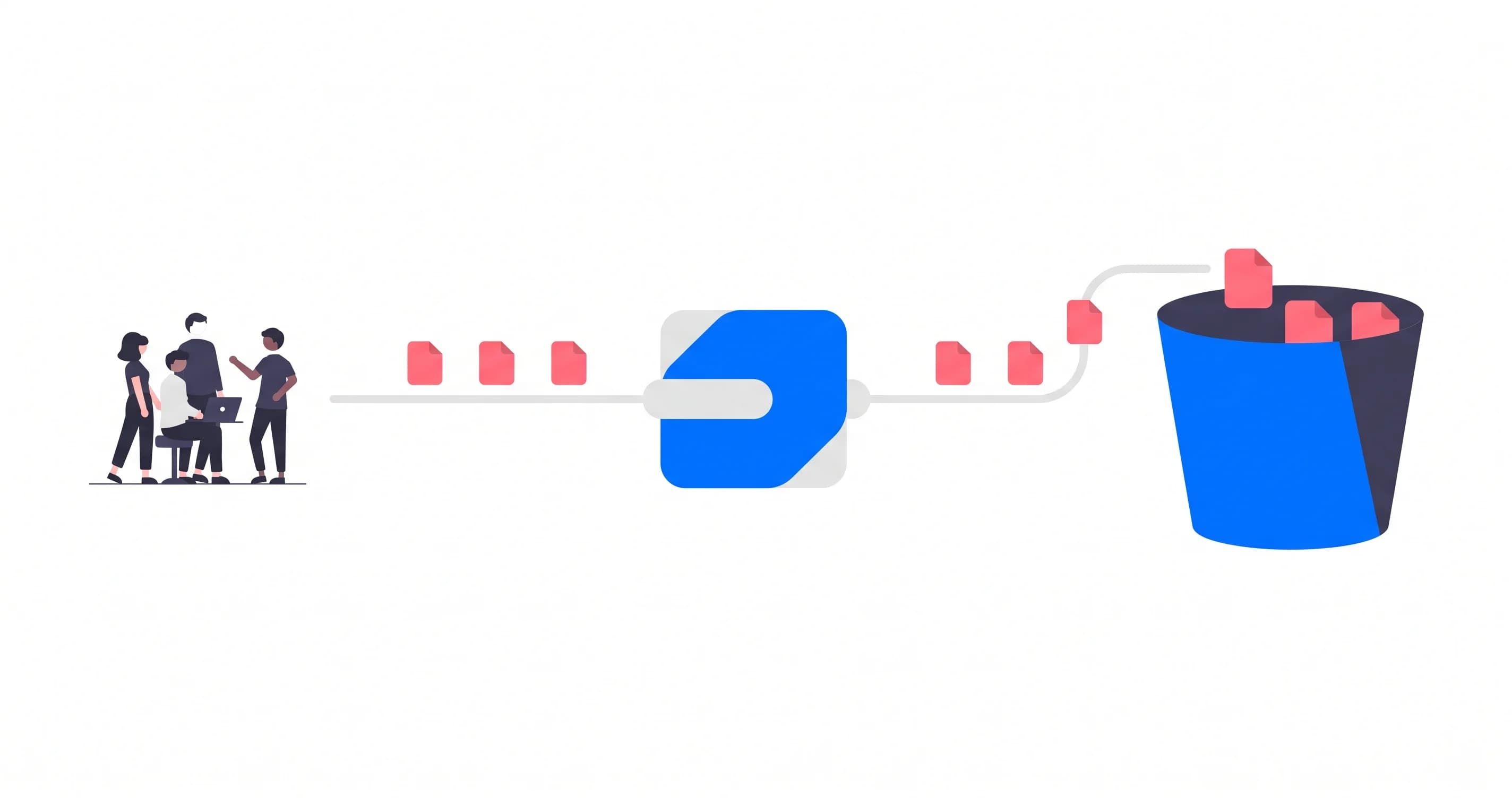
Every provider listed above works as a first-class data store in Rilavek. Point your FTP camera, SFTP client, or web browser at Rilavek, and we stream your data directly to your chosen S3-compatible bucket in real time. Data never touches our disks, and we never add extra egress fees.
This means you can run a complete production-grade ingestion pipeline for $0 total:
- Free Storage: Up to 10 GB to 75 GB free on Cloudflare R2, Scaleway, or IDrive e2.
- Free Ingestion: 10GB/month of transfer on Rilavek's free tier with unlimited Pipes and zero credit card requirement.
- Zero Egress: Pair Rilavek with Cloudflare R2 or Backblaze B2 for zero-egress data mobility.
Set up a Pipe, attach your free R2 or B2 bucket credentials, and start receiving SFTP, FTP, or TUS uploads in under five minutes.
Calculate Storage & Gateway Costs for Your Setup
Use the interactive calculator below to model storage size, egress traffic, and upload protocols across providers:
S3 Storage & Ingestion Architecture Sizer
Compare S3 storage, egress, and API costs across all major providers.
S3 Monthly Cost Comparison
Estimated monthly bill based on your storage and operations above.


Let users upload gigabyte files from browsers and mobile apps
Low-cost S3 buckets store your files. Rilavek eliminates the engineering headaches and infrastructure fees required to get data from external uploaders into your bucket.

Why Large Web Uploads Break
Direct uploads to S3 from the browser require backend presigned URL coordinators, brittle CORS headers, and custom chunk retry code. When mobile users switch cell towers or enter elevators, uploads fail and restart from zero.
- Spotty mobile connections and Wi-Fi drops force users to restart uploads from scratch
- Direct browser uploads to S3 fail on expired tokens and complex CORS configurations
- Building custom chunk retry logic delays shipping your actual product
Effortless Large File Ingestion
Rilavek exposes an open Tus endpoint compatible with Uppy and standard HTML forms. Large media files upload with automatic pause and resume, streaming in real time through memory directly to your bucket with zero disk exposure and instant HMAC-signed webhooks.
- Uploads automatically pause and resume across network drops without losing progress
- Users can reliably upload multi-gigabyte videos and files from any browser or phone
- Instant alerts notify your application the second an upload finishes
Connect your free S3 bucket on Rilavek (bring your own bucket, 10GB/month pass-through included, no card needed).
Technical Reference & Next Steps
- S3 Data Store Configuration: Step-by-step setup for AWS, Cloudflare R2, Backblaze B2, and generic S3 endpoints in our S3 Data Stores Guide.
- Browser Uploads with Zero Backend: Learn how to upload directly from React, Vue, or Svelte to your S3 bucket using the TUS Browser Upload Guide.
- Self-Hosted Storage Comparison: Prefer running your own storage hardware? Read our Self-Hosted S3 Storage Breakdown (RustFS, SeaweedFS, Garage, Ceph).
- SFTP Ingestion for Self-Hosted Buckets: Connect SFTP clients to RustFS without managing SSH servers in our RustFS SFTP Setup Guide.
Enjoyed this guide?
Share it with your network to help others scale their data pipelines.