If you run a WordPress site or manage production databases, you have probably hit this wall before. You install a backup plugin or configure a backup daemon, set it to save to Backblaze B2, and everything works fine. But the moment you want to follow best practices and send a second copy to Cloudflare R2 or Amazon S3 for redundancy, the software asks for an upgrade to an expensive "Pro" or "Enterprise" tier.
Multi-destination data replication is almost always gated behind an upsell.
This business model is everywhere. From creative workflows to enterprise cloud infrastructure, vendors treat data redundancy as a premium add-on. They charge extra just to send the same byte stream to two different buckets.
At Rilavek, we believe that data redundancy is a baseline requirement, not a luxury feature. We built a universal storage bridge that lets you upload once and fan out to multiple destinations simultaneously in memory. Here is how one Rilavek Pipe replaces the paid redundancy tier of half a dozen tools.
1. The Camera-to-Cloud Tax (Media & Events)
Professional photographers and videographers need to deliver content immediately. The standard workflow is shooting tethered wirelessly, where photos stream straight from the camera to cloud storage.
The Hidden Cost: Collaboration Lockout
To achieve a professional workflow where high-res RAW files land in an editor's Cloudflare R2 bucket and JPEGs land in a client's Wasabi or Backblaze folder simultaneously, creators often pay for pricey enterprise tiers of specialized media transfer software. You are effectively paying a tax just to share files across two destinations.
The Rilavek Fix: In-Memory Fan-Out
Rilavek acts as a universal adapter for your camera's built-in FTP capabilities:
- The Workflow: Your Sony, Canon, or Nikon camera connects via standard FTP or FTPS directly to Rilavek.
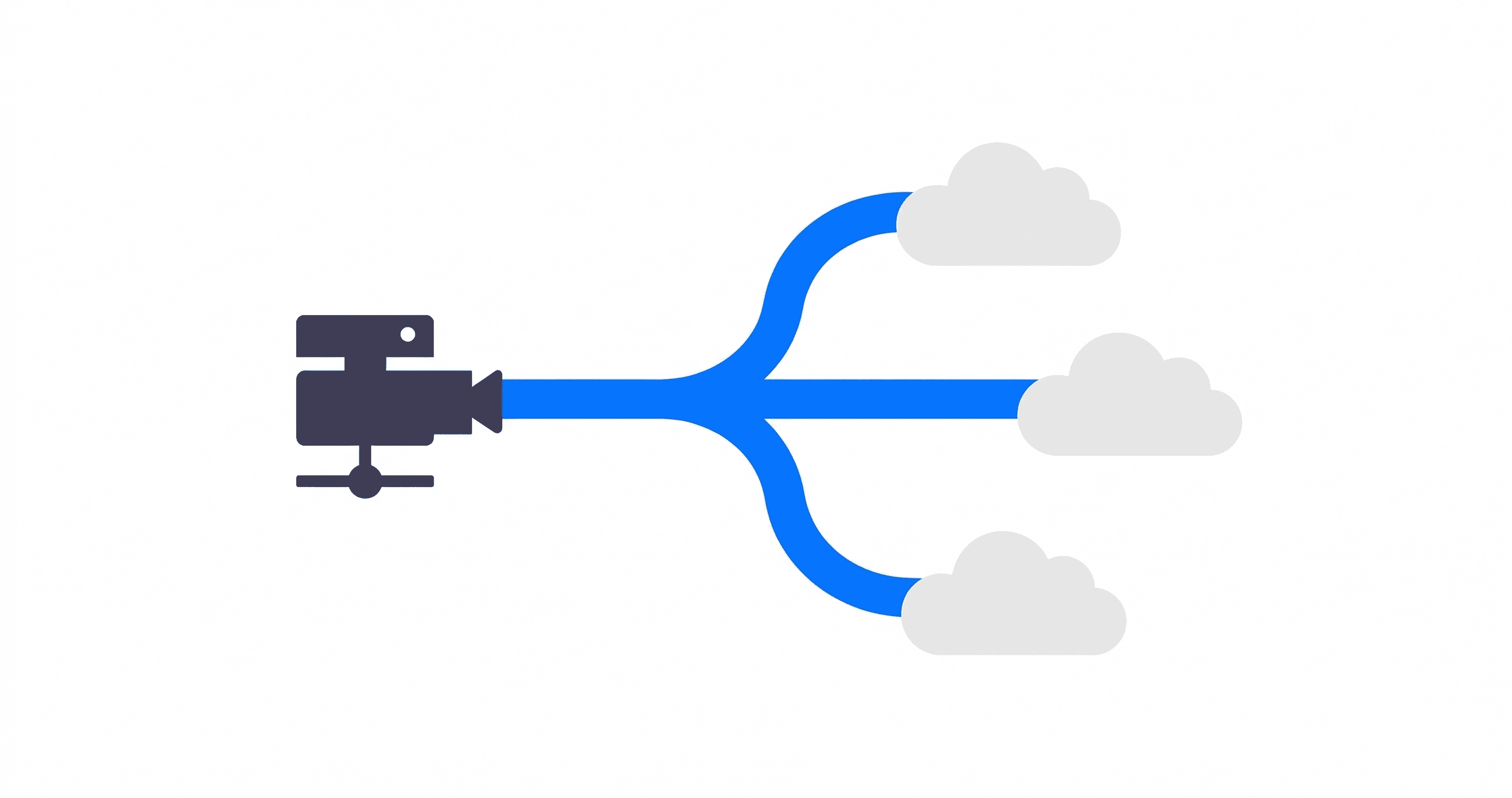
- The Fan-Out: Rilavek duplicates the stream in memory mid-flight. High-resolution RAWs stream to your studio S3 archive while compressed JPEGs land in the client's Backblaze B2 bucket at the exact same moment.
- The Savings: You skip expensive per-seat media software. Your camera uploads once, and Rilavek handles distribution without double-uploading over mobile data.
2. The Cloud Replication Tax (DevOps & Infrastructure)
Every infrastructure engineer knows the 3-2-1 backup rule: keep one fast hot copy for immediate recovery and one cold off-site copy for disaster recovery.
The Hidden Cost: Double Egress Fees
The traditional way to do this relies on cloud provider tools, such as AWS S3 Cross-Region Replication or external sync scripts. But there is a painful gotcha. When AWS replicates your data to another cloud provider or outside AWS regions, you get hit with AWS Egress Fees for every single gigabyte leaving their network. You pay to store the data, and pay again simply to move it out.
The Rilavek Fix: Mid-Stream Forking
Rilavek forks the stream before it lands in any single provider:
- The Workflow: Your server, backup script, or CI runner streams the backup archive to Rilavek once over SFTP, FTPS, or TUS.
- The Fan-Out: Rilavek replicates the stream in memory. One copy writes to AWS S3 (Hot storage) and the secondary copy writes to Cloudflare R2 or Backblaze B2 (Zero-egress cold storage).
- The Savings: Because the replication happens inside Rilavek before hitting AWS, you never trigger AWS data egress fees. You get genuine multi-cloud redundancy without the exit tax.
3. The IoT Middleware Tax (Industrial & Surveillance)
Legacy hardware, like older CCTV cameras or factory PLCs, is intentionally simple. A camera or sensor controller often supports only one outbound FTP connection and can talk to a single target IP.
The Hidden Cost: Expensive Hardware Gateways
To get telemetry from an older machine into both a compliance archive and a real-time analytics pipeline, organizations often buy dedicated "IoT Gateway" appliances. These physical boxes require maintenance, network configuration, and often per-device licensing fees just to split the stream.
The Rilavek Fix: Virtual Signal Splitting
Rilavek bridges legacy single-target devices into modern event-driven storage architectures:
- The Workflow: Your legacy device uploads to Rilavek via standard FTP.
- The Fan-Out: Rilavek streams the raw data into S3 for long-term compliance retention, while simultaneously firing an HMAC-signed webhook that triggers real-time AI processing or an alert pipeline.
- The Savings: You avoid buying intermediary edge hardware. One Rilavek Pipe turns single-stream legacy devices into multi-destination data sources.
Transparent Pricing: Pay for Bandwidth, Not Feature Gates
Instead of gating multi-destination routing behind enterprise contracts, Rilavek pricing is strictly bandwidth-based:
- Free Tier: 10GB/month of transfer with unlimited Pipes and zero credit card commitment.
- Starter: $10/month for 100GB of transfer, with multi-data store fan-out included out of the box.
- Pro: $30/month for 1TB of transfer for heavy production pipelines.
You never pay extra per user, per sender, or per destination bucket.
Technical Reference & Next Steps
- Multi-Data Store Setup: Learn how to configure primary and secondary buckets in our Data Stores Documentation.
- Agency Photography Workflows: See how live event teams use multi-destination routing in The Agency Workflow Guide.
- CCTV & Security Cameras: Stream surveillance footage to S3 and Glacier via our IP Camera Cloud Storage Guide.
- Zero-Egress Free Storage: Discover free S3-compatible providers to pair with Rilavek in our Free S3 Storage Guide.
Enjoyed this guide?
Share it with your network to help others scale their data pipelines.